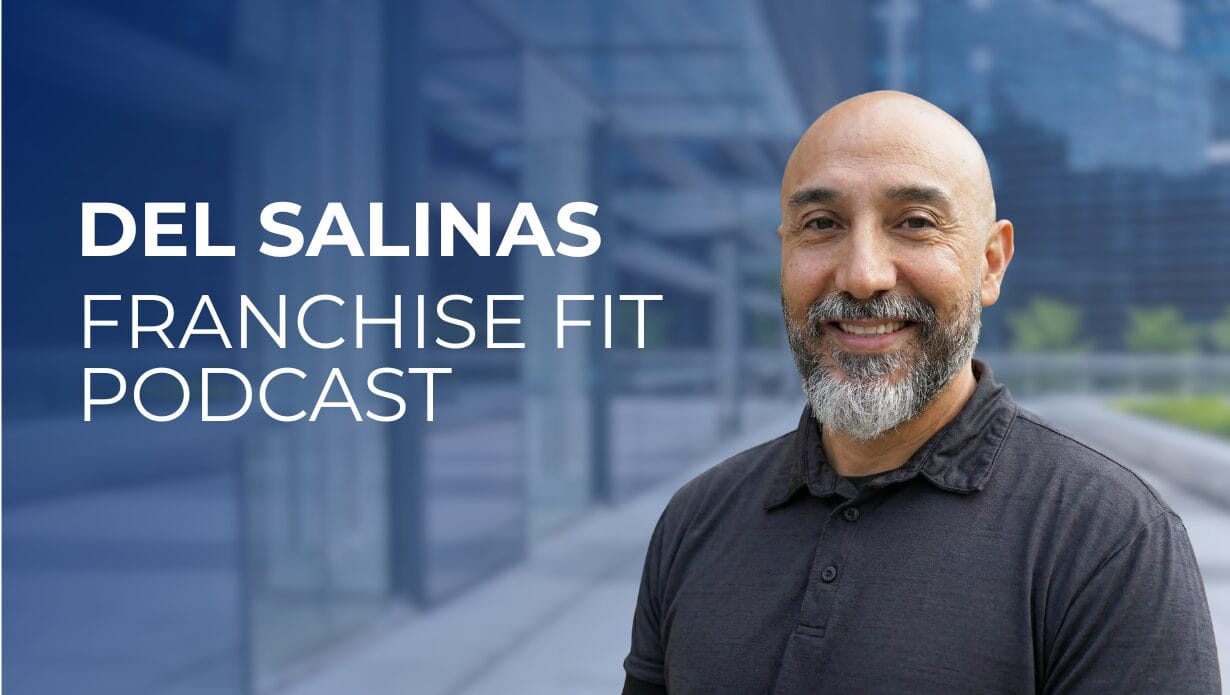
What does it really take to succeed as a home care franchise owner? In this episode of the Franchise Fit Podcast, Del Salinas, Director of Franchise Development at Caring Senior Service, joins host Lance Graulich to discuss what separates successful franchise owners from the rest. Del explains why coachability and following a proven system are critical, how technology is transforming the home care industry, and why demand for aging-in-place services continues to grow.
He also shares insights into caregiver recruitment, the support franchisees receive, and why professionals from industries like technology are increasingly choosing home care as their next chapter. If you’re exploring franchise ownership and want an inside look at one of the nation’s longest-standing home care franchise systems, this conversation is a great place to start.
Watch the full episode to learn more about home care franchise ownership and whether Caring Senior Service could be the right fit for you.
Podcast Transcript
Lance:
And welcome to another fabulous episode of the Franchise Fit podcast and I’m your host Lance Graulich. So, whether it’s your first time listening or you’re a return listener, well, thank you. I appreciate it. And today, we’re going to delve into senior home care. Amazing, amazing niche. Often misunderstood. We have Del Salinas. He’s the Director of Franchise Development for Caring Senior Service.
Del, welcome to the show.
Del:
Hey, thanks, Lance. Appreciate you taking time to chat today. Excited for our our talk.
Lance:
I am super happy to have you. So, Del, this I mean, what is the first sign, when you’re talking to people all day that want to get into a franchise, what’s the first sign someone’s not a fit Caring Senior Service?
Del:
Yeah, so the first sign is if someone’s not listening. Yeah, if they don’t want to really understand the business model. You know, it’s a simple model, but anyone getting into franchising wants to follow a system and a process. And when someone’s not listening very well and doesn’t want to take direction, they’re probably not a good fit for Caring Senior Service and I would doubt for franchising in general.
Lance:
So, that’s whether they listen, they have to be coachable, same idea, right?
Del:
Oh, 100% 100%. People that want to take direction and give direction make the best franchise owners.
Lance:
So, for those listening, you’re always looking at a specific niche that’s going to be recession-proof, recession-friendly, I like to say, a needed business. Well, Caring Senior Service is also very low cost besides being what I call very recession-friendly. No matter what, you got to take care of the seniors in your life and in this world. One 1.2 million is the average in the item 19 in the franchise disclosure document per territory. Great numbers. You have preferred lenders and a lot of people can get into this for about 100 grand with an SBA loan putting your 20% down. So, I wanted to make that statement.
So, let’s flip this to who is right? What is the formula for the successful franchise owners in your brand, and you’ve been around since the ’90s, a long time. What is the formula for being successful with Caring Senior Service?
Del:
Yeah, it’s um following the system and process. We We’re celebrating 35 years of being in business this year and we’re successful because we have a simple process. I never say easy when you’re dealing with people, right? It’s never always easy, but simple.
And so, the ideal candidate, the successful owners are the ones that follow the process and as you get into franchising, for everyone listening, you’re going to hear that quite a bit. But it really is about making sure you trust and believe in the system and process and follow that system and process.
Lance:
Del, why does it seem that senior care is often so misunderstood?
Del:
It’s a great question. It’s a question I I deal with on a daily basis. You know, even though we’ve been around 35 years, this is still a fairly new business. A lot of people don’t know what home care is. It’s not something you learn about in in our 20s, 30s, 40s, or even 50s. We learn about it when mom or dad or a loved one have an accident, an episode, and now they’re they’ve been in the hospital, they’ve been in rehab, they’re ready to come home, and they’re being told, “Hey, someone’s got to be with mom or dad because they can’t toilet or bathe or make their own meals right now. So, who’s going to help them out?” This is where the adult child starts to freak out and say, “I have no idea. What do I do?” And we want to let them know there’s help.
Well, you know, on the positive side, you don’t deal with this until you get older, but everybody deals with this. So, this is something that’s a growing need, and it’s not going away. Um with more and more people, you know, aging to 65 and up and needing more and more care, this is something that’s going to be growing. And so, it’s something that people don’t navigate until they’re forced to. And so, we work with owners who want to communicate that in their community, build those relationships within their community, so that when people need this service, we’re available.
And you spoke to that 1.2 million average gross billings within our territories. This is a huge demand that’s growing and growing and growing. You don’t need to manage hundreds of clients to be successful. You’re managing 20 to 30, you know, clients at a time to hit those numbers. So, it’s a very manageable, it’s a very successful, it’s a very doable business model for people that want to be hands-on, people that want to grow in their community, build those relationships with their clients, with their referral sources in their community, and then with their team, with their caregivers.
Lance:
Yeah, and when you mention numbers again, I wanted to also mention I have plenty of friends in the senior care space, and I know their margins, their net, depending on how they operate their business is anywhere from 15% to as high as 22%. And that’s awesome margins for a worthwhile business where I mean, you talk about empathy, you talk about feeling good.
You know, I also want to address what you were saying. I thought when I first heard home care many years ago, I went through it with my parents like you were describing, so I understood then immediately, whether I liked it or not, as to what senior home care was all about. In fact, I went back to New York to help the senior care franchise folks with my dad. I didn’t want him to be alone. Mom was still there, but Mom had other responsibilities in the house.
Del:
Right.
Lance:
And it was it was a good experience. It was a needed experience. But I still thought like senior home care, is this like assisted living? Is this a brick-and-mortar building? The answer’s no. And people want to age in place these days, right, Del?
Del:
Correct. Yeah, so again to kind of piggyback on the question on what is senior care, people know about it. People don’t know about it. They think it’s a personal care home where someone’s going to or assisted living. There’s many different places where a senior can go to get support, but to your point, people don’t want to go to facilities. They want to remain near their family. They want to remain independent as long as possible, but need a little bit of help. And this is where, you know, our growing industry is at, where there’s more and more people who need a little bit of help to stay at home.
And that’s the challenge. Right? The challenge is that it’s not a 24/7 facility. The challenge is that you are working with the schedule and availability of your caregivers, the needs of the person you’re working with their budget. And so it is that that compassion to understand that people going through this, your clients are learning about it for the first time. They have no idea what’s covered and what’s not. They have no idea what the cost is. And so you’re educating, you’re telling them this is what’s going to take. And every time our services are much more affordable than a full-time facility. And so you have to navigate that with the client to let them know, you know, this is what it would cost over here. This is what you get with us and you get this one-on-one time with us versus a facility where you’re having, you know, 10, 20, 30, 50 people or patients with one or two caregivers in that facility. If mom or dad wants that one-on-one time, they’re going with a home care brand.
Lance:
Aging in place. I love saying it because it’s very descriptive. To me that means I want to stay in my own place, whether it’s a condo, apartment, house. I want my own remote control, I want my own bed, I want my own pillow. I don’t want to be in a strange place, especially as I’m a senior and I’m taking prescription drugs, I’m not comfortable as it is. I mean, so there’s a lot of training that goes into this. Talk about technology and you know, you’ve been around a long time. What’s changed? What’s stayed the same?
Del:
Yeah, yeah, good. Great question. I love talking about this. So, you know, as much as we’re a home care brand, we’ve been leading in technology for quite a while. You know, what doesn’t change is the care. What doesn’t change is the working with the people. You know, the conversations, relationships you’re building with your caregivers, your clients, your community. That’s really the foundation.
But as technology changes, as it grows. And right now we’re in a space where it’s booming. It’s growing more and more ways with AI, with technology, with automation. We’re at a point where we’ve been able to maximize and leverage technology and AI to help with caregiver acquisition and recruitment, communication with your clients, the care navigation with the entire care team.
A lot of time people were coming home and they may have a nurse or a physical therapist, occupational therapist there for an hour, and then they leave. But mom or dad still need care. And so, we have to be involved to understand what’s going on with the nurse, what’s going on with PT, OT. How can we help bridge those gaps?
So, technology we’re using with our proprietary software is an all-inclusive, one-stop shop for everything you need for your business. It’s a way to communicate with the entire care team and family. We’ve also leveraged different AI platforms and tools to have accessibility to understand what the client needs when we’re not there, and to trigger notifications when things are going on to make better decisions about the care plan. And there’s no buttons to press. It’s very similar to talking to your Alexa at home or Siri. It’s recognizing the needs, asking for help, and then we can take that information and modify the care plan. So, there’s a ton of opportunities that we are doing right now and are leading in that technology space for our clients, our caregivers, and owners.
Lance:
Amazing. Another often misunderstood key is that most of the industry, when I mention to people home care or senior home care, and not all of the business is seniors. It could be a somebody much younger that that has special needs that needs to be taken care of as well, but most of this business is non-medical. Talk a little bit about that.
Del:
Yeah, so you know, we are non-medical, and a lot of people don’t understand what that means. And this impacts a couple of ways. You know, one is um you know, most health insurances are not covering our services because we’re non-medical. So, the majority of our clients are private pay or working with a long-term care insurance policy that a lot of folks get when they’re, you know, younger. They’re riders or add-ons to your life insurance policy. And no one talks about life insurance with their kids, right? It’s always down the road when it’s at that time. You know, you need to have a chat with your folks to understand, do they have this this um long-term care insurance that will cover our services?
So, non-medical is anything helping with activities of daily living. They help with toileting, bathing, dressing, preparing meals, companionship, respite care for the family. These are things a family member can do, but maybe aren’t available. So, we come in and help. It does not include wound care or administering medications, even vital signs. That’s considered medical.
So, people don’t understand. “What do you mean my insurance is not covering this?” Well, this isn’t a health insurance. This is something different. So, there are different ways to get the client help to pay. But our services if not medical are parts of life that you’re going to need help with. So, helping out of bed, helping go to the restroom, right? And it’s a wide range, everything from end-of-life care, when somebody wants to be with their loved one, um to companionship, you know, when we recognize mom or dad are a little lonely because the spouse has passed and the house isn’t as pristine as it used to be, mom’s a little depressed, she’s not going out like she used to be. All these areas are where we’re going to make impacts with our clients because those are needs that that vary from person to person.
Lance:
You mentioned support earlier. Maybe a lot of people listening don’t realize that, you know, you could start your own senior home care business like this, but you’re not going to do as well as when you join a franchise. The whole idea of a franchise is you have a model, you have the support, you have this playbook, and you have this runway.
I talked to somebody not that long ago who was in a home service brand, not in senior care. And the son was concerned that dad was spinning his wheels 8 years into a business. He made it to $850,000 after 8 years. And he said, “Well, why would I join a franchise?” I said, “Well, I hate to say it. In that particular model, I have franchises you would have done 850 in year one.” And there was dead silence on the phone. Like, I didn’t realize. Just pay your franchise fee. Accelerated growth is what I call it. But talk a little bit about your support and what you’re doing to support franchisees with training and then obviously as they get in the franchise and they’re post revenue.
Del:
Yeah. So, you know, again, people join a franchise system to follow a process that’s proven and have that support. That’s what you’re paying the royalty for. That’s what you’re joining the franchise system for is to get that support. And because we’ve been around so long, we have every piece of the business you’re going to need already laid out. Any system, process, vendor, supplier, any tool, any task, we have it all laid out. And then we’re walking you through. You know, you’re not vetting out tons of different platforms for accounting, for scheduling, for billing, for assessments, for recruitment. Everything’s been vetted out. Everything is systematized, in place.
And then we have a very deep support team. We have a very deep bench of directors and people below our directors. A headquarters team that’s with you in every part of the business. So, you get that one-on-one quality time. You know, we’re not the you know, biggest gorilla in the room. We’re you know, right in the middle area, which gives us the opportunity to spend a lot of one-on-one time with our owners, build those relationships, give you that quality time. I don’t know how many systems where you’re a phone call, text message, virtual call, chat away from anybody, from any director to the CEO where you have that relationship.
And so, the support you’re getting from the first conversation with me to meeting our directors to understanding what licensing is going to look like in your state, to understanding what training is going to look like, to recruiting your office team, recruiting your caregivers, how you’re going to get clients, and then the tools you’re going to use. This is something from day one that we’re with you the entire step of the way in building to get to your point of getting to, you know, close to a million dollars in revenue by year one or two as opposed to, you know, year eight.
Lance:
I absolutely love it. So, I understand there’s a really interesting trend you’re experiencing, you know, with a lot of layoffs or downsizing in the tech world. You’re getting a lot of people from the tech world coming at you looking to get into home care. Talk a little bit about how that translates.
Del:
Yeah, so over the past, I’d say 18 months or so, you know, I’m seeing a lot of folks who are in project development, project management, and in different tech sectors, and in different industries, but have a similarity of working with technology, and are seeing um AI coming in, and on one hand, you know, they’re anticipating that at some point it’s going to replace them in their role. And there’s some truth to that.
However, we look at the opportunity to bring the two together. The AI, the tech, and the personal compassion piece. And a lot of people who have been in a corporate world or technology space for years and decades are seeing, you know, one, I want to do something that’s bringing more value in the world, something that’s going to have purpose in what I’m doing. A lot of them have experiences personally like you spoke of, or are seeing the big need, and then saying, “Hey, I have this relationship with technology already. I see that Caring Senior Service does the same.” And they’re coming to us to say, “Hey, how can I put these two worlds together and build on this opportunity with AI, technology, and doing a business that provides purpose and support.” So, I’m seeing that trend continue to grow.
Lance:
So, in this business, the revenue usually isn’t an issue. There’s plenty of customers. You know, every day another 15,000 Americans turn 65. But, what’s the dirty little secret about caregiver recruiting that people just need to understand?
Del:
Yeah, so um you know, first and foremost, this is going to be a priority from day one to year 20. All right? This is the part of the job that I talked about earlier about the compassion and the passion for working with your caregivers. And a lot of people don’t understand what that really means. There is no recruitment issue. There’s a retention issue. And I say that because the caregivers are working multiple agencies, multiple jobs. They’re working to make ends meet like all of us are working. And they’re only working when there’s a client that matches their availability, their skill set, and the part of town they can work.
So, that that’s a full-time role for somebody to understand that just as important as the client, more so is the caregiver. And you have to build that relationship. You have to understand the caregiver is not usually the breadwinner in the family, right? If the spouse has opportunity to make more money for a day or a month, it makes sense to go with that, which means they’re not saying no to you. They’re saying yes to a better opportunity for them. And you have to have backup plans upon backup plans. Build those relationships. Have more than one caregiver working with you with your client so they understand that we’re a team. At the end of the day, we’re building the best care and providing the best care for our clients. But, you have to provide the best care for your caregivers, too.
And you know, people don’t leave their jobs, they leave their bosses. So, as an owner coming in, you have to have that compassion to work with your caregivers to understand what do you need? How can I help you be successful? That’s that part that a lot of new owners need to understand.
Lance:
Del, you’ve been an excellent guest. Give me your final thoughts, final words of wisdom for those looking for their first business. What advice would you give them?
Del:
Yeah, do it now. Reach out and have a chat. You know, give me a call, send me an email. Let’s talk a little bit to understand, you know, what your goals are and how they can align with Caring Senior Service and see if we can’t get you moving in the next 6 or 12 months.
Lance:
And for those of you watching and listening, I am happy to share Del’s info with you. I represent tons of brands in all industries. Happy to connect you with someone else. If for some reason you don’t think home care is right for you. Del, thank you for being on the show. You were an excellent guest and look to have you back for some updates in the next couple of uh months perhaps.
Lance:
That sounds good, Lance. I appreciate it. It’s great being here.