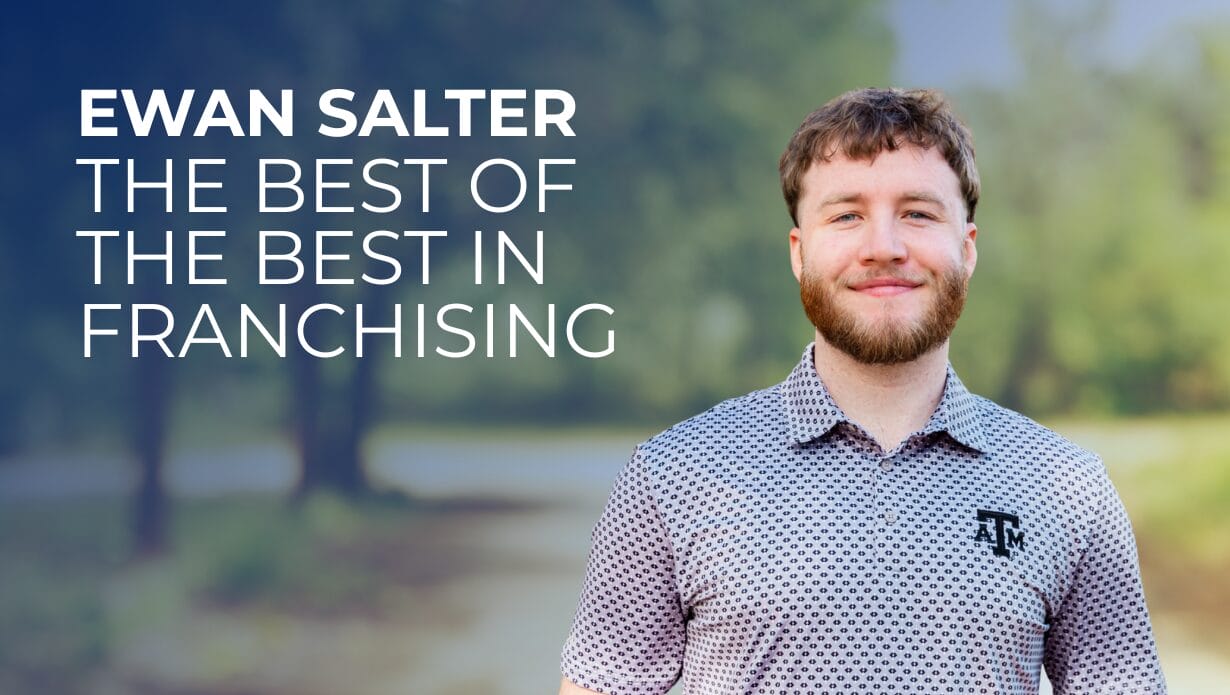
How can artificial intelligence help seniors stay safer at home? In this episode of the Best of the Best in Franchising Podcast, our Agency Director of Caring Senior Service in Austin, Ewan Salter, shares how we’re using innovative technology to enhance care for seniors and support family caregivers. From fall detection and health monitoring to caregiver scheduling and communication, Ewan discusses how tools like Sensi and Kerry help us deliver more proactive, personalized care. He also explores the future of AI in home care and why technology will continue to play an important role in helping seniors age in place safely and independently.
Listen to the interview or read the full transcript below.
Full Transcript
James Butler:
Welcome to this episode of the Best of the Best in Franchising Podcast. It would be good to have Ewan Salter join us. He is with the Caring Senior Service Franchise brand.
He is actually the agency director for the Austin location. It’s an absolute honor to have Ewan on the podcast today. So thank you so much for being here. We really appreciate it.
Ewan Salter:
Yes. Thank you, James, for having me. I’m looking forward to discussing about AI and how we use it in senior care.
James Butler:
Fantastic. So as you mentioned, we’re going to talk about the impact of AI on the senior care business. So maybe we’ll just start off to talk about why AI is valuable for senior care, why senior care is ready for AI. We can talk about that a little bit to start with.
Ewan Salter:
Yes. So really with it is AI is here to stay. It’s one of those things when I first was starting around, we didn’t know exactly how long it was going to be for and what uses it was going to be. Now we’re seeing a lot more of those uses.
For example, AI allows us to be in seniors’ homes all the time, even when we’re not providing services for them. That’s really the main benefit that we have found is that it allows us to have close eyes on our clients even when we’re not in the house.
James Butler:
Fantastic. So, you guys have some different tools you do for that, right? So there’s a…I’ve talked with your father, Jeff Salter, before about that. But maybe you could just tell us about some of the different tools you have there in the home and how you use that to stay in touch with the clients and how they can get in touch with you or how their family can get in touch with you as a result of what those tools actually are.
Ewan Salter:
The main thing that we’re using with AI in clients’ houses are these safety devices. Typically, how they work is we plug them into the main areas where the senior is spending most of their day. We’ve typically found that to be their living room, their bedroom, and the bathroom.
With these devices, they’re all audio-based, and they give us insight 24/7 at the client’s house. Primarily, the main things that it’s really impactful for us for is falls. If the audio device detects a fall in the house, we get a high-level alert on our phone, we get a call, all members of the staff get it, and we’re able to either reach out to family members who either live in the home and might not have heard it, or family members that live nearby, and we’re able to let them know, “Hey, we detected a fall at mom or dad’s house. Are you able to get out there, or do you need us from one of the staff members to get out there?”
And of course, we’re able to kind of when we get that alert, we’re able to kind of sense the urgency needed depending on kind of the sound we got from it.
And so obviously, there are some where if we detect that fall, and of course, first we do is we try to reach out to the client. If the client’s not able to answer the phone, then we do go ahead and dispatch EMS out the house because it’s better to be safe than sorry in those situations.
James Butler:
Absolutely. That’s really cool that you guys do that. That’s really great.
So talk about workforce shortage a little bit. I would imagine how AI uses that. You have to recruit caregivers to work for you, and you can have some retention issues with that as well.
But how is AI helping you to anticipate rising demand? Maybe you even replace workplace shortages with your caregivers that way, or just safety expectations. We talked about that as well.
Just talk about some of the tools you have. I know you guys have a couple of tools specifically with Sensi and Kerry Care. But you talked about those two specifically.
Ewan Salter:
Yeah. So what Kerry Care is essentially is an AI virtual care manager that we have. And we’ve kind of used it for a primary reason.
It’s really to keep in contact with caregivers about updates with their schedule and more minute stuff that our care managers don’t really have to worry about too much in the day. So with Kerry, what it will do is once a week, it’s texting all our caregivers asking for their availability, making sure it’s the same as last week, or if it any changes, it will update that and update it to our system. It also sends out their schedule for the week.
It also, before the shift starts, it lets them know, hey, Ms. Jones is about an hour away from you. The shift starts at 11. You might want to leave your house at 10 AM.
So it just kind of gives our caregivers a lot of reminders and keeps them up to date with things about their clients. Also, if we have any call outs on shifts, we’re able to use Kerry to best match caregivers who we think can accept that shift. It has a numerous amount of things that bases off.
It goes how many shifts they picked up recently, their distance to client, and of course, if their availability lines up with that. So we’re using Kerry in that sense. It really is like an extra care manager we have here.
It’s helping us out with scheduling, with keeping up with caregivers, and all sorts of things. There’s more to come with it.
James Butler:
That’s awesome. How many caregivers do you typically have for each client? Or maybe you could even just talk about for a franchisee, how many caregivers they typically have working for them? I know that depends on the variables.
Ewan Salter:
It definitely varies, but with our company, what we try to do is really keep one caregiver with the client. We found that it creates a bunch of hassle in the house. If clients have multiple caregivers coming in, of course, if the shifts are longer, if they’re like a 24-7 client, now, of course, they have about three to four caregivers.
But if it’s a client anywhere from 10 to 40 hours a week, we typically try to keep the same caregiver over there consistently.
James Butler:
That’s great. And I would imagine Kerry probably helps you retain your caregivers longer too, because you can find out their schedule changes, and you can adapt to adjust things on the fly with what your programs are too. That’s great.
Ewan Salter:
Exactly, yeah. It definitely helps us keep some of those caregivers, because sometimes it does take a little bit before they get out on their initial shift. With our company and our industry, we really don’t have clients sitting waiting for a caregiver.
If a client is sitting waiting for a caregiver, they’re going to go to another company. They’re not going to be sitting around waiting. So it definitely helps us as soon as we get a new client come on.
We have its care plan loaded into Kerry, and it’s able to decide what other caregivers we should probably offer the shifts to. Of course, we have our own knowledge of, hey, this caregiver might be a good fit, but if the case there’s a call out, we’re trying to scramble on really quick who’s available, Kerry is right there to help us out with that search.
James Butler:
That’s awesome. Was that something you guys built yourselves or did you help out with that process? I know you have a lot of background in that kind of technology, right?
Ewan Salter:
Unfortunately, I’m the wrong brother for that. My older brother is the one who’s already involved in technology.
But no, Kerry is from a separate company. I believe the man who started at Nazar, he started Kerry when he had the same search for his mom needing some help around the house. So he developed Kerry to be for families as well, not just for us as a Caring Senior Service is like an extra care manager, it’s meant for family members as well.
Every family member staying involved and care for mom and dad. So it has a lot more use than what we just use it for.
James Butler:
Sure. So the other senior care franchises offered as well is that something exclusive to you guys there at Kerry?
Ewan Salter:
I believe right now, so we’re the test pilot with it. My dad met Nazar, I believe at a conference or something, and Nazar pitched the idea to him and my dad was really interested about it, and we’ve been the guinea pigs essentially to see how it could help out. We’re only using Kerry in about three of our locations right now.
Like I said, the test run to make sure before, it’s something that we want to expand out to all our other franchises and offer as a separate thing.
James Butler:
Yeah, that’s awesome. Talk about Sensi a little bit.
Ewan Salter:
Sensi is those audio-based devices that I talked about earlier. Of course, I mentioned earlier, the falls are a really big benefit for them. We’re able to stay in sight of when there’s falls when we’re not in the house, but it also has a huge, huge amount of insights it picks up.
My other big ones I really talk about are, it can do some really good early UTI detection. So, with the AI, it typically takes about four to five days to get used to somebody’s normal routines, right? And so it’s able to let us know if a client is maybe having a lot more frequent urination, or difficulty urinating and things like that.
And so we can either reach out to the family members or reach out to a home health involved in their care and let them know, “Hey, we got an insight here that we might be having an early UTI.” And I’m sure that you know UTIs, if they go unnoticed, a whole lot of things can happen. So it’s really good to stay on top of that and kind of have that early detection so we could be more proactive about.
James Butler:
That’s awesome. Very cool.
Ewan Salter:
It does the same thing as well for respiratory difficulty. It will let us know, for example, Ms. Jones has had a 150 percent increase in the amount of coughs over the last couple of days. So we’re able to let family members know those insights.
Like, “Hey, we picked up that mom’s been having some more difficulty with her breathing and we might need to go get that checked out.” But also gives us a lot of insights like if it’s a good caregiver-client match, it could pick up on things like that. And it’s never something that we can be like a “Big Brother” and tune into our clients and hear what they’re saying and things like that.
It will pick up those insights and send them over to us. There’s never a time where we could go all sit around, “oh, let’s listen to Mrs. Jones right now.” That does not happen.
So it’s a really cool technology that we’re able to use and we’re able to send those insights to family members and so they’re a lot more involved in caring and staying on top of those things.
James Butler:
That’s awesome. So is that something that’s exclusive to you guys there at Caring Senior Service as well?
Ewan Salter:
I believe there are some other home health agencies who are using Sensi, but we were one of the first adapters of it. It’s really amazing technology. It is safe in multiple lives.
James Butler:
That’s awesome how you’re using that to alert you to different things and also to be proactive about things that may be coming up in the senior’s life and may be aware of, for sure. That’s awesome. So I think that’s much better, too.
I think that like a wearable or a camera or something like that, that you are much more dignified, right? I think that’s something that seniors worry about. “Is this going to impact my quality of life?”
And I think what you’re doing there is letting them know, “Hey, we really care about you. We will take care of you in that situation.” So they don’t have to have a camera or worry about those kinds of things there.
Ewan Salter:
Because that’s the one thing with the life alerts as well, is you had to charge them. So there are some times when they’re not on the client’s body. I have a good example with how Sensi saved one of our clients as well.
We were there for caring for the husband. He struggles with some dementia and sometimes he can be a little bit aggressive. And so we’re out there a couple of days of the week, giving wife some respite hours so she can go out and go shopping, do the things that she wasn’t able to do.
Well, one night, the client, he was having some difficulty and being a little agitated. And so the wife was trying to help him either get up into bed or out of bed. And he became very aggressive with her, and he shoved her.
And when he shoved her, she fell and actually broke her femur. And this happened at about three in the morning. And she hadn’t she was nowhere near her phone or anything like that.
But she was able to it didn’t pick up the fall, but she was able to pick up her yelling help, help, help. And we were able to get out there and get her taken to the hospital immediately. And like I said, it saved her life because she was down there on the ground with a broken leg.
And there’s numerous other examples we have where Sensi has helped us save clients’ lives. If they had a fall hit their head, we were able to get out there and get EMS out there as soon as possible. And it has led to, of course, health and overall safety of our clients.
And it has also led for us to increase some of the hours we have with clients because we’re able to use those insights and let the family know, “hey, mom and dad are really struggling at this time, and we don’t have anybody there. We might want to extend our hours till then,” and things like that, and is able to really help us as a business grow.
James Butler:
That’s a great insight. And what a valuable service provided those families as well. That’s awesome.
So we talked about early prevention a little bit, proactive care. What are some of the other things that AI helps with as far as, we talked about falls a little bit, illness, like coughing, cognitive changes, before they become emergencies. What kind of things does AI do to help recognize cognitive emergencies or cognitive changes specifically?
Ewan Salter:
So yeah, that is definitely some insights that we get, is it will let us know that they’re having some more cognitive difficulties. And with that, we’re able to relay that information with the insights to family members or other care coordination, with like home healths that are involved in their care and kind of letting them know, “hey, we’ve detected some decline in the cognitive function of so and so. We might need to maybe, like I said, increased amount of hours we’re over here and things like that.”
James Butler:
That’s great. So also one of the things I wanted to mention to you a little bit about is technology, how it affects your caregivers and supports them instead of replacing them. I think a lot of people worry about AI replacing them.
How does Caring Senior Service help caregivers, have the assurance that your tools that you’re using for AI are going to help support them but not replace them?
Ewan Salter:
Well, right now, all the AI tools that we have are not directly involved in caregiver duties. It’s really more care manager duties, so they don’t really have to worry too much about that. We’ve gotten some feedback from them and they’re liking it.
They’re a little annoyed with the amount of text messages we might be sending out through the AI, but they are liking that constant communication with it. They’re always able to get a text back right away. With Kerry, it also, side note, it has access to our caregiver handbook over policy and procedure.
If there’s any caregivers have any slight questions about policy and procedure, they’re able to text Kerry and get a response, and not have to worry about calling the office, asking the question, us searching it up, taking time out of the day. It’s able to give them a little bit more freedom. They don’t have to worry about bugging us, about little small details, about certain things, and so it’s really helpful.
I don’t really think they have the feeling that AI is here to replace them, and we certainly don’t want them feeling like that.
James Butler:
Right. Sure. Absolutely.
I would imagine this helps a lot with paperwork too. I like what you said there about it probably eliminates guesswork, because we can see here’s what needs to happen in the situation with the policy and procedures are specifically. But how does it help you with doing paperwork and stuff like that, or updating the family members what’s happening?
Automated or how does that work specifically?
Ewan Salter:
So it isn’t automated. About once a week, we get a message from the Sensi team letting us know, here’s a care report. And we’re able to send that care report out to the designated family members involved in their care.
As much as the paperwork, unfortunately, we’re not at that point where it’s reducing our paperwork load. So, we’re still having to make sure we’re filling out everything, especially if there’s like a fall occurrence, we still have to do our proper procedure and fill out the incident reports and things like that. As far as paperwork, it’s not really lowering the amount that we’re doing, but with those insights, like I said, we send those out manually.
Hopefully, soon you’ll be able to send it out right away to those family members.
James Butler:
Right. I would mention the families appreciate that, getting those reports and knowing what’s going on with their families. Do a lot of the clients, do they live in the same home or do a lot of them live in different states that you’re serving and helping the seniors in?
Ewan Salter:
So, it really all depends. We do have some who mom and dad live on the bottom floor of the house. Kids live up top or there are some where they’re 15 minutes away, but we also do have others where their states away or some country or sometimes their country is away.
We’re not able to be directly involved in that care. So having those insights and letting them know, especially when there’s a fall occur, we’ll give them a call, let them know, “Hey, we detected a fall, mom’s okay, just wanted to let you know.” So, they’re all involved in everything and they know what’s going on in the house.
James Butler:
Sure. Well, talk about your role. Now, you’re actually the agency director there for the Austin location.
What have you been doing? I know you’ve been working with Caring Senior Service for a while now, but we could just talk about how your role has evolved and what you’re doing now, specifically the business.
Ewan Salter:
Yes. So starting off when I was in college during my summers, I did an internship with Caring and I worked as a care manager. I started off in a Wilmington, North Carolina, office and did about three months there doing care manager roles.
So that just really overseeing the care of our seniors, doing orientations with clients and caregivers and just really making sure caregivers are at their shifts, things like that. Then the following summer, I went to our locations up in Colorado and I interned in the marketing side. So, I got to see how the marketing team worked up there, going to different home healths, rehabs, hospitals, hospices, just talking about what we do as a company.
And then when I graduated about a year and a half ago, I started as a care manager in San Antonio and my primary role was more field focused. So, I was out there doing all the orientations for caregivers to client, doing all the supervisory visits—just really being the person in the client’s homes, making sure everything’s going all good. And then here recently, I got promoted to the Agency Director role for Austin.
And now my role is everything. I’m in charge of payroll billing, marketing, new client sign up, making sure everything’s running well with clients and caregivers. Luckily, I have an amazing care manager on my team, Maya.
She’s able to really handle most of the orientations and getting out to clients, things like that. And I handle all the rest of everything. It’s a lot, but it’s kind of fun wearing multiple hats.
James Butler:
Yeah, for sure. Now, when you install the Sensi device or whatever it is, is that something that most caregivers can do on their own? Or is it something that has a special—
Ewan Salter:
So it’s our staff members who come in and install that. And it’s really easy to set up. The caregivers could do it, but it’s just something that we do.
And with our Sensi units, that is included. If anyone is getting hours from us, or they’re getting any services from us, we do include the Sensi at no additional cost. But then we do also offer Sensi as a standalone, where they just have the Sensi in their house, and we’re monitoring them.
And if there’s anything going on, we’re relaying that information to family members.
James Butler:
Very good. But what do you see as the future for senior care? I mean, obviously, I know this is the growing industry because more people are turning 65, 70 because of the baby boomer generation.
What do you see as the potential for people starting this business for senior care specifically?
Ewan Salter:
It’s definitely something that is going to be a pretty big boom in industry. Like you said, there’s a lot more people getting older every year. And of course, a lot more people are realizing that there’s additional options for staying at home as a senior.
They don’t have to go to independent living facilities, things like that. They’re able to, if they want, and they’re able to remain at home and have the same amount of help. And so as we go in the future, I don’t really see a, maybe there might be caregiver robots we have down the line, but at least for now, we don’t have any plans of anything like that.
And I think it’s like you said, it’s only going to be growing and more and more people every day find out about senior care and what we do. And so it’s definitely something I think is going to be growing a lot. And I’m sure my dad could tell he’s been around in this industry since nobody knew about senior care and there was not many companies and now there’s thousands of different options.
So it’s really hard. And that’s why we make sure we have technology at our forefront because we want to stand out and show people that as times are changing, we’re not still stuck in the past with our ways; we are evolving with the future as we go along.
James Butler:
Yeah, I love that. That’s awesome. Well, I think to your point about the robots, I mean, that may happen in the future, but I don’t know if anything, I think maybe seniors are a little bit distrusting of AI.
Maybe having a room in their house might be a little bit.
Ewan Salter:
It already is hard enough to get these sensing devices plugged in. I had to go off my speech, I kind of be a viewer. I promise I’m not Big Brother.
I have a lot more to do with my day than to tune in and see what Mrs. Jones is doing in her living room at 12 PM on a Friday. I was like, we don’t have that. We have to get emergency insights and things like that.
Otherwise, it’s just picking up stuff to give us. There’s no sitting around and let’s listen to people.
So, they’re pretty distrusting about that. But when they have their family members, there’s someone with their daughter in the house, and the second we tell them about Sensi, they’re like, “yeah, let’s get that installed.” Especially with our other care partners, whenever we tell them about Sensi, it’s pretty amazing technology that not many people are using. I did just recently find out there’s another similar device here in Austin that another company is using, but that’s the first I’ve heard of it.
I’m sure in the coming future, it’s going to be an industry standard to have these in clients’ houses.
James Butler:
Right. For sure. That’s awesome.
Well, imagine just the transparency that offers to the family is such a valuable thing, because like you said, if the children hear about that from their parents, they’ll say, we definitely need that because if they fall, especially because that’s a big concern that a lot of seniors have is falling, and that can change their life quite dramatically. So, if something happens like that, like in the case you gave the example of, if you wouldn’t have had any care, it could have been there for a long period of time, but that could be very dangerous for people for sure.
Ewan Salter:
Exactly. It used to be beforehand to take the caregiver showing up to their shift to find the client on the floor. Now we’re able to get that insight and get them the help they need exactly when they need it. There’s no longer having to wait on the ground for seven hours before someone shows up.
James Butler:
Well, talk about the real-time insights that you get from that. You mentioned it improves trust a lot with families when they get those updates, especially people who live a long way away to say, “hey, wow, these guys here at Caring Senior Service, they really care about our family and they’re taking good care of us.” Do they also get updates for what’s happening with the caregivers themselves that say, “hey, here’s what your caregivers are doing and how they’re helping you?”
Ewan Salter:
Yes. With our CRM, we use Tendio. Clients and clients, family members have their own login.
They’re able to log in and see the visit notes from days we had caregivers over there, and they’re able to look at it and see if there’s anything they need to be aware of, changes in conditions, things like that. They already have the option to see exactly what’s going on every day, but like you said, they’re very happy about us sending those insights.
Like I said, most people’s parents aren’t going to be telling them they need additional help. They’re struggling with some things like that. And so, what we’re able to do with those insights is kind of go around the client and let the family know, hey, they might be giving you push back on needing additional help, but we have these insights here that are showing us that they do need the additional help. And so we’re able to really convince the family members and let them know, let’s go ahead and get those additional hours.
And like I said, we’re able to, if the client’s the one making those decisions, we’re able to bring those insights to them and kind of sit down and talk with them and say, “hey, we’ve noticed these over the last couple of weeks. My recommendation is we do this and that,” and they’re usually able to receive it a lot better when we use that approach.
James Butler:
Sure. But you guys are all private pay, right? What do you guys have as service providers you work with as well?
Ewan Salter:
We are private pay, but we also do work with all long-term care insurance programs.
James Butler:
Okay.
Ewan Salter:
And we also do have a couple of veterans programs that we work with.
James Butler:
Okay. Well, anything else you want to add about privacy and ethics and consent in the home? I think that’s a very important thing about AI specifically that people worry about is, listen again or whatever it is.
I think you obviously have explained that you’re not doing that. All you’re looking for is patterns, like for a certain sound or how frequency of a sound, and that’s what it’s picking up. But anything else you want to add about privacy and ethics and consent in the home and how what you provide balances that with respect and dignity that you want them to have, but also giving them data security.
Ewan Salter:
Only our staff members have access to Sensi, so we’re the only able to see all these insights. As far as security with it, it is a very secure site. They’ve done a great job of having all those procedures and stuff set in place because that was everyone’s main issue when they first started talking about Sensi and things like that was how is this able to, of course, give our clients the respectful and the confidential out of the need.
And so Sensi did a great job and everything that we do with Sensi is all all HIPAA compliant and everything like that.
James Butler:
That’s fantastic. What do you think is next for AI and senior home care?
Ewan Salter:
That’s a great question. I know in the future here, hopefully, with Kerry, Kerry is soon going to be able to talk to people. It’s not just going to be a text only.
So that’s pretty cool. But I can see AI kind of being like a AI, like a nurse or doctor someone has in the house doing like AI visits, check-ins, making sure things are going all good. Like if someone has to report their blood pressure every day, they’re able to give that to their Amazon or their new Alexa.
That’s going to be really up to date with the care. So I definitely do see there’s probably a lot of new technology AI wise that’s going to be coming out for the senior care industry.
James Butler:
Well, I think what you said too about predictive care, saying we put better plans together, offer more hours, adjust things to get the best care plan for people, that’s really valuable as well. So, I think you’ve given them a lot of great insights to how the business works specifically. So that’s great.
So, any other thoughts you want to share about why people should join to be a part of the Caring Senior Service family and join your franchise before we finish up here today?
Ewan Salter:
Well, first off, we’ve been around for a long time. We, it’s a very great process and you’re not going to find many companies where technology is at much of the forefront as is in our company and as it’s growing in each year, more technology has been involved. We have a great franchise support system here at Caring Senior Service.
The whole team is always open for any questions our franchises are encountering and helping them will go through that process. And it’s a great company. I’m not just saying that because it’s a family company for me.
It just overall, the work culture that is established there is a pretty great one. It’s more of a family we have with everybody in the office compared to just a job for some people. And senior care, it’s one of those things.
It’s a very rewarding job. It could be very stressful. It could be lots of ups and downs in it.
But at the end of the day, you’re making impacts, direct impacts on people’s lives and at something that is able to push you through those hard days. It really grounds you. You’re here for a purpose, doing something great.
James Butler:
Yeah, that’s fantastic. Well, I really appreciate your insights today about the predictive nature about what AI could do in the future, what it’s doing for you guys now to help you schedule better with your caregivers with Kerry, with Sensi as well. There’s a lot of great tools you guys are using now to help your franchisees be more successful in their businesses.
More importantly, connect with the seniors, with their families, and with the caregivers, so they know how to help them out of their specific needs and situations. So, thank you so much, Ewan, for taking time out of your busy day to share your story and your insights about AI, what’s happening with that right now. We really appreciate it.
Ewan Salter:
Thank you so much for having me. It was a pleasure.